

5 Reusable Literacy Center Activities That Save Teachers Time All Year
“Change the words, not the work. Keep students learning independently while protecting your small-group instruction.”

It’s Sunday afternoon, and you’re looking over your lesson plans for the coming week. Somewhere between planning your small groups, preparing assessments, answering emails, and making sure you have everything ready for Monday morning, you remember something else.
Your literacy centers.
Again.
New activities. New directions. New recording sheets. New displays.
And just when your students finally understand what they’re supposed to do, it’s time to change everything!
If you’ve ever been responsible for maintaining math, reading, and content-area centers in your classroom, you know how quickly the preparation can add up. Each center needs to be organized, stocked with meaningful work, and ready for students to use independently. And because we’re teachers, we want those activities to be engaging, purposeful, and connected to what our students are learning.
That’s a lot to ask of a few little baskets and folders!
But what if you didn’t have to change everything?
What if you could create a handful of meaningful activities that students could return to throughout the year, with only a few small changes?
Over the years, I discovered something that made my classroom run more smoothly and gave me back some much-needed planning time.
I didn’t need to change the activities. I just needed to change the words.
Instead of constantly introducing something new, I began looking for ways to make familiar assignments work with different vocabulary lists, books, and content. My students still practiced important skills, but I wasn’t spending so much time preparing new materials or explaining new directions.
And that one simple shift made a remarkable difference.
You Don’t Need Five New Centers
Before we go any further, let me clarify something.
I’m not suggesting that you create five new literacy centers in your classroom. Goodness knows we have enough things to organize already!
Instead, I’m sharing five reusable activities that can live inside the literacy or content centers you already have.
The directions stay the same. The expectations stay the same. The materials stay mostly the same. What changes is the spelling list, vocabulary, book selection, or subject matter.
Once students learn how to complete an activity, they can return to it again and again without needing another lengthy explanation. They know where to find the materials, what their finished work should look like, and how to turn it in. That familiarity helps students become more confident and independent, which is exactly what we want during center time.
And that means something even more valuable than saving preparation time.
It protects your small-group instruction.
When I’m working with a small group of students, I want to give them my attention. I want to listen to their thinking, notice where they’re struggling, and respond to what they need. That’s difficult when I’m constantly interrupted by students who need directions explained for an activity they’ve never seen before.
Familiar, purposeful center activities help make that focused instruction possible. Students can move through work they understand while I spend meaningful time with the children sitting in front of me.
Here are five of my favorites.
-
Weekly Spelling Contracts
One of the first classroom routines I changed was my weekly spelling work.
You know the routine. New spelling words on Monday, practice throughout the week, and a spelling assessment on Friday. Somewhere in there, students complete assignments to strengthen their spelling skills, and those assignments eventually land in a stack on your desk.
I wanted my students to have regular, meaningful spelling practice, but I didn’t want to spend my evenings grading another mountain of papers. I also wanted students to have some choice in how they practiced rather than requiring everyone to complete exactly the same exercises.
So I created a spelling contract.
Instead of assigning a different worksheet every week, I created one contract with a variety of spelling activities. Each activity had a point value, and students could choose which combination of activities they wanted to complete to reach their weekly goal.
The spelling list changed every Monday, but the contract didn’t.
Students learned the activities, understood the expectations, and selected work that helped them practice their words. Some activities were quick and simple, while others required more time, thought, or creativity. Students who wanted an additional challenge could choose more demanding activities or work beyond the basic point requirement.
And because students didn’t all need the same spelling list, I could differentiate the vocabulary without creating an entirely different assignment for everyone. The contract provided a consistent structure while allowing the actual word work to meet individual learning needs.
I also made the contract available during independent center time.
That was especially important for students who didn’t always have the opportunity or support to complete assignments at home. I believe homework should reinforce skills students have already learned, not require a parent to teach an unfamiliar concept. As a general guideline, I want students to be able to complete independent homework with approximately 90% accuracy.
And I recognize that not every child goes home to the same circumstances. Some have families who can sit beside them every evening, while others may have responsibilities, crowded homes, or adults working long hours. Providing time during the school day gives more students an opportunity to complete their work successfully without being penalized for circumstances beyond their control.
Eventually, checking the contracts became part of our classroom routine, too. Students calculated their points, and designated classroom helpers checked completion and recorded the totals while I remained available to oversee the process. I still monitored student progress and assessed actual spelling mastery, but I didn’t need to personally score every practice activity.
One familiar assignment, new words each week, and meaningful practice all year.
I’ve shared more about how I organized and managed my weekly spelling contracts in an earlier blog post, [The Top 5 Ways to Make Weekly Spelling Review Work for You].
-

Change the words, not the activity! Familiar vocabulary routines help students build confidence, strengthen word knowledge, and work independently. Vocabulary Activities That Make Your Word Wall Work
I love a good word wall. I love the colors, the organization, and the way important vocabulary becomes part of the classroom environment.
But I love a word wall that students actually use even more.
Whether you’re teaching science, social studies, or language arts, vocabulary displays can become wonderful resources for independent literacy activities. Rather than creating a separate assignment every time you introduce new content, you can use the words already displayed in your classroom as the foundation for familiar writing activities.
For example, one activity I’ve created to accompany my science vocabulary word walls is called Science Sentence Cards.
Students choose three vocabulary cards, read the words and accompanying sentences, and talk about what the words mean. Then they write their own sentences using those vocabulary words and draw pictures that demonstrate their understanding.
Students who are ready for an additional challenge can combine two or more vocabulary words into one strong sentence. This encourages them to think about how scientific ideas connect instead of simply using each word in isolation.
Imagine using this with a weather unit.
Students might select words related to precipitation, temperature, or wind and create sentences that demonstrate how those concepts connect to weather they can observe. Their illustrations provide another opportunity to show understanding, especially for students who are still developing confidence with written language.
When your class moves on to another science unit, you don’t need to create an entirely new literacy activity. You simply change the vocabulary cards.
Another favorite is Create Your Own Vocabulary Word Wall.
Students use black-and-white vocabulary cards to create illustrated mini word walls. They draw pictures to represent the meanings, add details, and can even write sentences showing the words in action.
These mini word walls can become reference tools students use during later writing assignments. Students aren’t simply copying definitions; they’re creating visual reminders of important concepts in ways that make sense to them.
Both activities encourage students to read, discuss, illustrate, and write about important content vocabulary. They also work well with partners or small groups, giving students opportunities to explain their thinking and learn from one another.
And because the directions and recording sheets remain familiar, students can complete the activities with increasing independence.
Your classroom word wall becomes more than a display.
It becomes a working part of your literacy instruction.
-
Reading Response Journals
This is one of my favorite ways to extend the value of a good read-aloud.
After sharing a picture book with my students, I don’t want that beautiful story to disappear onto a shelf, never to be seen again. We’ve spent time enjoying the characters, exploring the vocabulary, making predictions, and talking about the story. Why not build on that experience?
Instead, I like keeping previously read books in a basket where students can revisit them during independent literacy time.
Because students have already heard the books read aloud and discussed them as a class, they have some familiarity with the stories, vocabulary, and characters. This is especially helpful for students whose independent reading abilities are still developing. They can participate in meaningful comprehension and writing activities without having to tackle an entirely unfamiliar text on their own.
Students can choose a familiar book and respond to it in their reading response journals.
Perhaps they’re writing about a character’s decision, making a connection to their own lives, exploring a theme, or explaining how a character changed. A familiar set of response prompts gives students structure while still leaving room for personal interpretation and thoughtful writing.
And here’s the wonderful part.
The book doesn’t even have to change.

A student can return to the same story and explore a different question, character, or perspective. A book that inspired a personal connection one week might inspire a discussion about a character’s motivation the next.
The journal routine remains familiar, while the thinking becomes deeper.
Once students understand the expectations, a simple rubric can help them review their work. Peer feedback can also become part of the routine, giving students practice recognizing strong responses and offering helpful suggestions. The teacher can then review selected entries, monitor growth, and use the work as evidence of learning.
Students aren’t simply filling time. They’re returning to literature, strengthening comprehension, organizing their thinking, and developing their written responses.
And you’re getting more instructional value from books you’ve already shared.
-
Student-Created Literacy Games
Who says the teacher has to create all the games?
Certainly not me!
Students can be wonderful creators of classroom learning materials, and I love giving them opportunities to contribute something their classmates will actually use.
At the beginning of the year, students can work in groups to design simple, reusable board game boards. These might have a path of spaces, a starting point, and a finish line, but no particular vocabulary or subject attached to them.
Then, throughout the year, those boards can be brought out and used with different spelling words, vocabulary terms, or content-area questions.
Students might create bingo boards using their current vocabulary, make spelling cards for classmates, or prepare question cards for a familiar board game. The format remains consistent, but the content reflects whatever students are currently learning.
And there’s another benefit I especially love.
Students are creating something for an actual audience.
Their classmates will use the materials they’ve made. That gives students a reason to write clearly, check their spelling, and make sure their directions or questions make sense.
Of course, students need clear expectations for accuracy, readability, and completeness. The teacher can review or approve materials before classmates use them, and students can revise their work when needed.
But once the routine is established, students can contribute to the classroom learning community while practicing important literacy skills.
And those games can be pulled out again during review time, at the end of the day, or whenever you have a few minutes for meaningful practice.
That’s a win for everyone.
-
Student-Created Review Questions
Here’s another activity that works beautifully across subject areas.
Instead of always creating review questions yourself, invite students to write them.
Students can use their notes, textbooks, vocabulary lists, or familiar reading selections to create questions about what they’ve learned. This requires them to return to the content, identify important information, and think about what someone else would need to know.
In science, they might write questions about weather patterns, habitats, or the solar system. In reading, they might create questions about a character’s actions, the sequence of events, or the meaning of a story. In social studies, they might use content vocabulary to develop questions for a class review game.
You can provide a simple, reusable recording sheet with spaces for the question, answer, and source of information.
At first, students may write straightforward questions that ask classmates to remember facts. As they become more comfortable with the activity, you can encourage them to write questions that require explanation, comparison, or deeper thinking.
The questions can become part of classroom review games, partner discussions, or future learning activities after you’ve checked them for accuracy.
Students practice identifying important information, forming clear questions, and thinking about what someone else needs to understand. They also have opportunities to discover gaps in their own knowledge as they decide whether they can explain the answers.
And once again, the activity stays the same.
Only the content changes.
Make the Work Count Without Creating More Work for Yourself
Now, here’s something I’ve learned after years in the classroom.
Just because students are busy doesn’t necessarily mean they’re learning.
And let’s remember something important.

They’re children!
These are little humans who have been on this planet for less than ten years. They’re curious, energetic, funny, sometimes distracted, sometimes wonderfully determined, and sometimes perfectly happy to do the bare minimum.
I understand. I can remember being that elementary student myself!
Part of our job is helping them develop responsibility, independence, and pride in their work. We can’t expect every child to automatically recognize the value of an assignment or challenge themselves simply because we’ve asked them to do their best.
That’s why I believe center activities need clear expectations, a purpose, and some form of accountability.
But that doesn’t mean we need to collect and grade piles of papers every Friday afternoon.
My spelling contracts gave students choices while holding them accountable for completing meaningful practice. Reading response journals allowed students to demonstrate their thinking over time, and vocabulary activities helped me see how well students understood our science content while also giving them opportunities to practice writing skills.
Sometimes one assignment could provide evidence of learning in more than one subject area.
For example, a science vocabulary sentence might demonstrate both an understanding of a scientific concept and the ability to construct a meaningful sentence. With appropriate criteria, I could look at the same piece of work through two different instructional lenses.
As teachers, we’re often expected to collect grades, document progress, and demonstrate student learning. Having purposeful assignments that provide useful evidence can make those responsibilities more manageable, especially when the work connects naturally to skills we’re already teaching.
Not every practice activity needs a formal grade. Some can be checked for completion, some can receive peer feedback, and some can be selected for closer teacher assessment. The key is establishing a system that allows students to see their work is valued while giving you meaningful information about their progress.
Practice Isn’t a Bad Word
I want to mention something else, because I think it matters.
I really dislike the term busywork.
Not every assignment needs to introduce a new concept or require an elaborate final product.
Sometimes children need practice to strengthen a skill they’ve already learned. Sometimes they need opportunities to build fluency so that reading, spelling, or writing becomes more natural and automatic.
Sometimes they need to revisit something familiar, approach it in a different way, or simply have enough time to feel successful.
And sometimes they need an enjoyable activity that gives their brains a little break.
All of those things can have value.
But if we’re assigning something simply to keep children quiet for twenty minutes, without a meaningful purpose, I think we can do better.
Our students deserve quality assignments, time to process their learning, and opportunities to create work that is valued. Even a simple activity can be meaningful when it helps students practice, reflect, create, or connect with what they’ve learned.
And teachers deserve classroom routines that make those things possible without requiring hours of additional preparation.
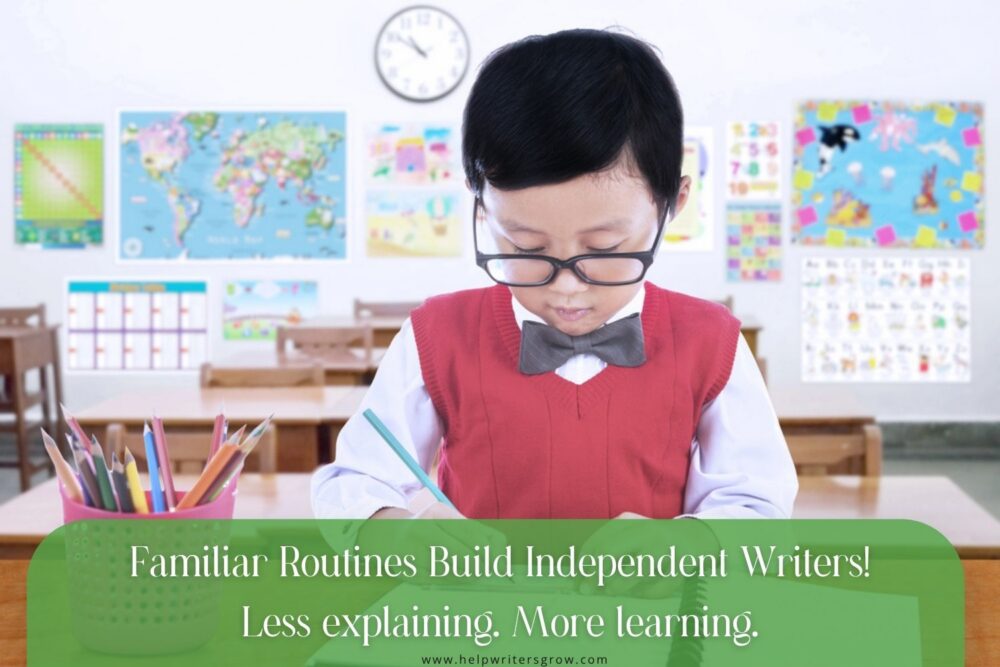
Teach the Routine Once. Let the Learning Keep Growing.
Of course, none of this happens magically.
At the beginning of the year, you’ll need to teach students how to complete each activity, model your expectations, establish routines for collecting work, and practice what independent center time should look and sound like.
That takes time, and there will probably be a few reminders along the way. After all, we’re working with children, not tiny independent contractors!
But it’s time well spent.
Because once those routines become familiar, students can move through their work with greater confidence and independence. They know what to do when they finish, where to turn in completed assignments, and how to get started without waiting for another set of instructions.
You can change a spelling list on Monday without teaching a new assignment.
You can introduce a new science unit without rebuilding your vocabulary center.
You can share another wonderful picture book without designing an entirely new reading response activity.
And while your students are engaged in familiar, purposeful work, you can focus your attention on the small group sitting in front of you.
The students who need additional instruction. The students who are ready for a challenge. The students who benefit from a little more time, conversation, encouragement, and support.
That’s where I want to spend my energy.
Not continually reinventing worksheets.
A Little Less Preparation. A Lot More Purpose.
Your literacy centers don’t need to be new every Monday to be meaningful.
Sometimes the most powerful thing you can give your students is a familiar routine that allows their confidence, independence, and creativity to grow.
Choose a few activities that support your instructional goals. Teach them well. Give students opportunities to make choices, take responsibility, and create work that matters.
Then change the words, the books, or the content as your students continue learning.
The routines stay familiar. The learning keeps growing.
And maybe, just maybe, you’ll get a little more of your Sunday afternoon back.
Hugs, teacher friend.
Thank you for spreading your sunshine to your students and sharing your magic with the world.
The world needs you.
Make Your Weekly Spelling Routine a Little Easier!
Looking for a way to make spelling practice more meaningful without reinventing your activities every week?
My Weekly Spelling Contract gives students choices in how they practice their words while helping them build independence, responsibility, and confidence.
Teach the routine once, introduce new spelling words each week, and let your students take a little more ownership of their learning.
Explore the Weekly Spelling Contract and make spelling practice work for you!